
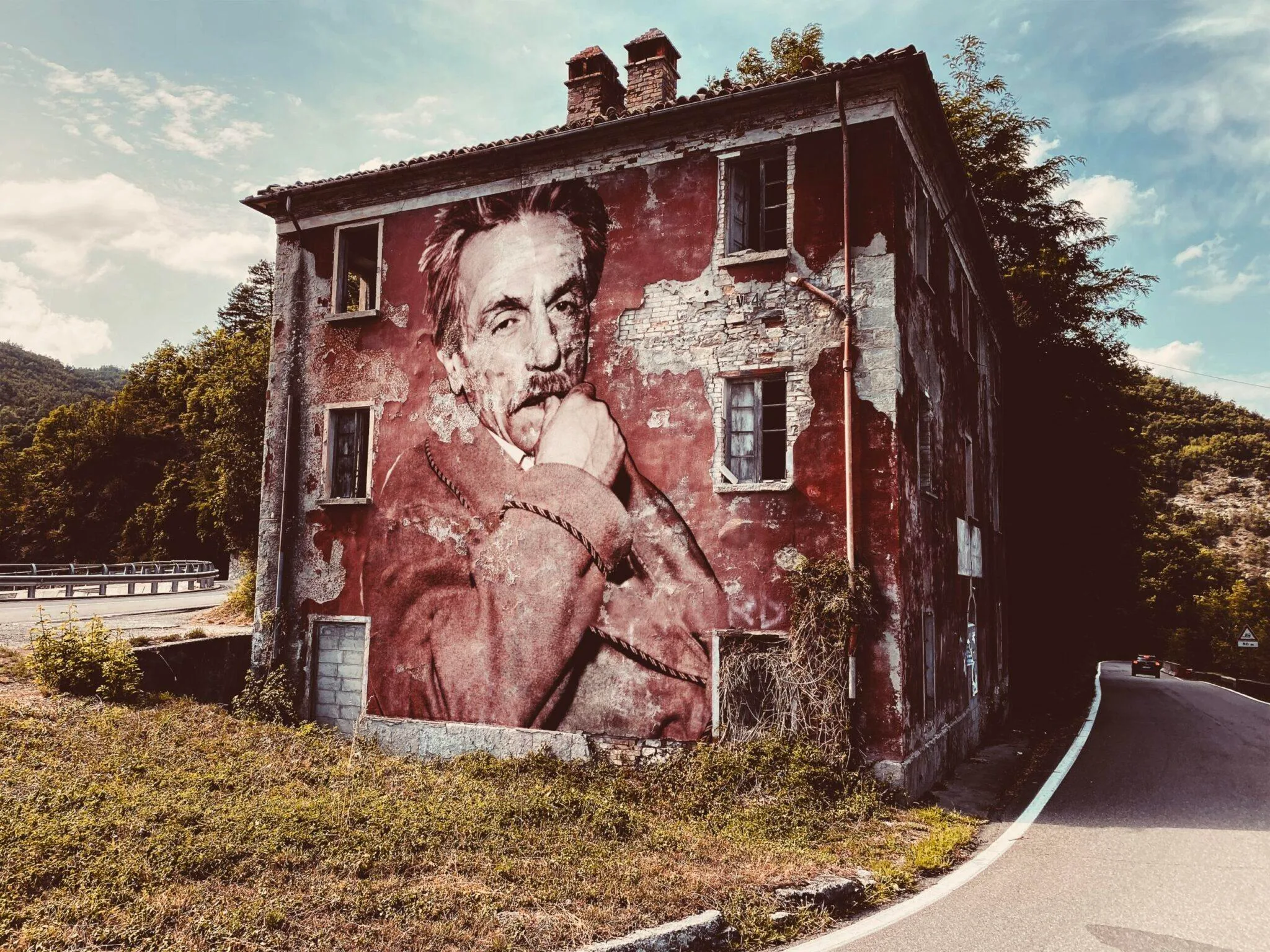

Since the late 2000s, Beast has steadily reshaped the language of street art, moving from sharp political mash ups to a quieter and more reflective practice. Based in Milan, the artist now works far from advertising driven city centers, intervening instead in abandoned walls and forgotten places.
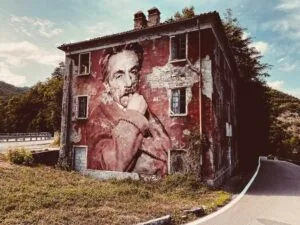
In his ongoing series “…and we hired a bloke to fix the wall,” historical figures emerge directly from decaying architecture. Writers, philosophers and artists appear not as images applied to the wall, but as if they were embedded within it. Each work is created through a precise process in which the photographed texture of the wall is fused with the portrait before being pasted back onto the same surface.
This interview explores Beast’s relationship to history, memory and public space, questioning what remains when cities erode and attention fades.
Your work has evolved significantly since your early political mash-ups. Looking back, how would you describe this trajectory from satire to the more contemplative tone of your recent works?
I never really left politics; I just changed the distance from which I observe it. In the beginning my work reacted directly to current events, to the immediacy of power and media imagery. Over time I realized that the present is volatile and short-lived, while the mechanisms behind it are persistent. Shifting toward a more contemplative approach was a way to slow things down, to look beneath the surface and focus on what remains when the noise fades.
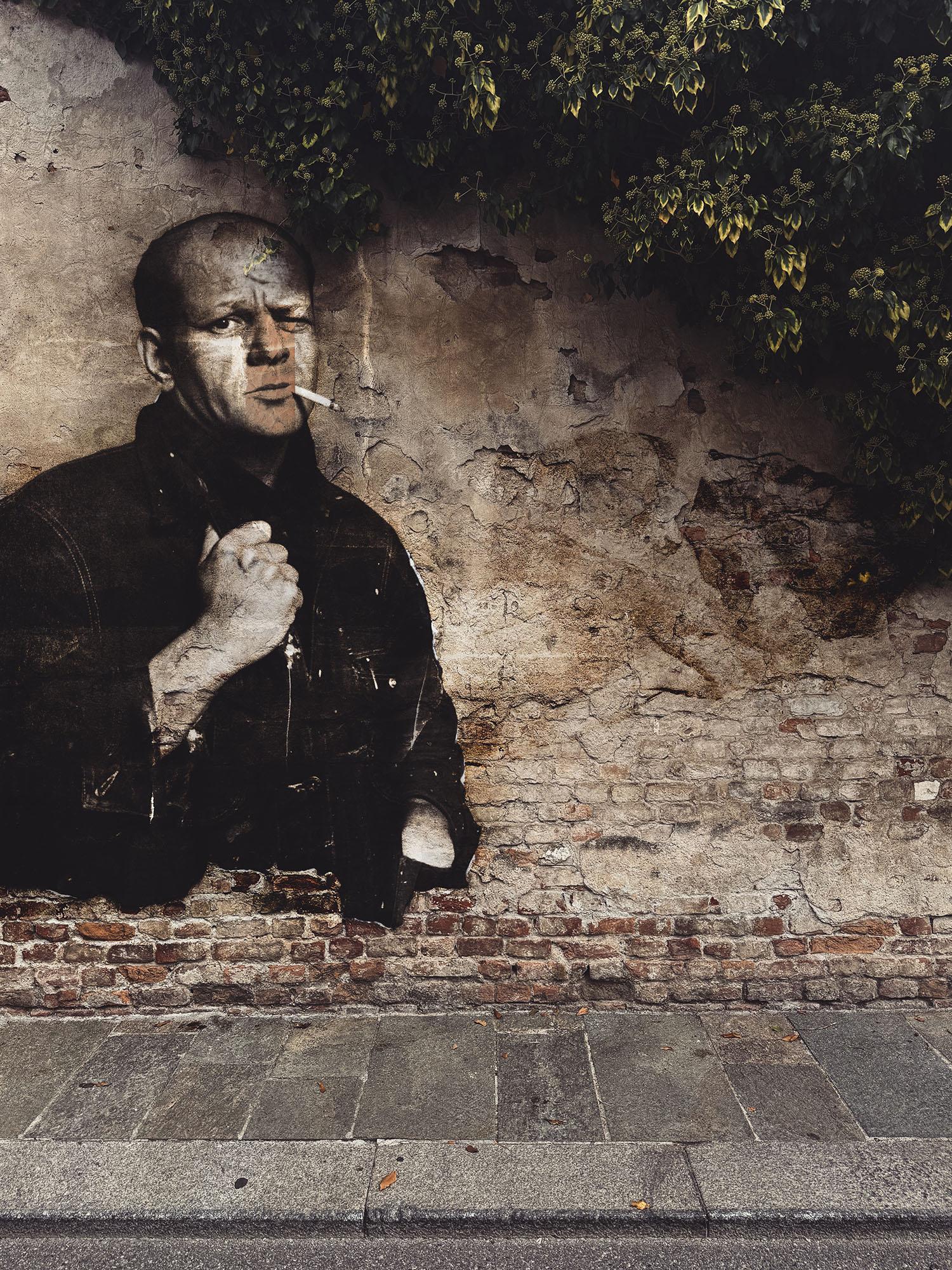
Your latest series, “…and we hired a bloke to fix the wall”, focuses on historical figures emerging from abandoned walls. What was the conceptual trigger behind this project?
The starting point was a sentence by historian Howard Zinn that I consider fundamental: “If you don’t know history it is as if you were born yesterday. And if you were born yesterday, anybody up there in a position of power can tell you anything, and you have no way of checking up on it.” That idea became the backbone of the series. “…and we hired a bloke to fix the wall” is about resisting historical amnesia, about bringing the past back into the present in a physical, unavoidable way. These figures reappear from the walls as reminders that knowledge is not optional—it’s a form of defense.
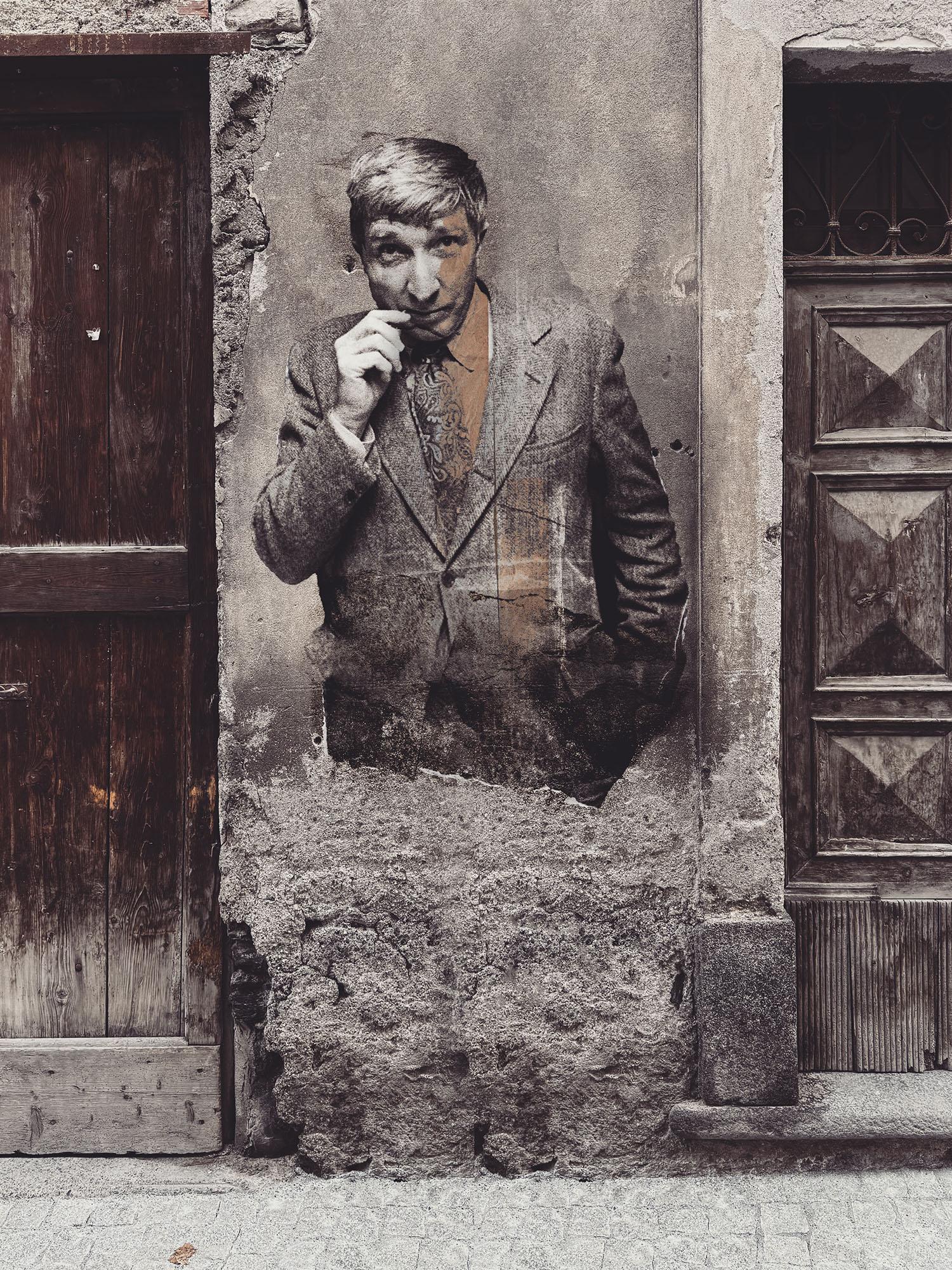
The figures you portray—writers, philosophers, artists—are carefully selected. What connects someone like Simone de Beauvoir to Philip Roth, or Jung to Eduardo De Filippo?
What connects them is not their discipline, but the depth of their legacy. They all left behind a body of thought that continues to resonate beyond their time, often contradicting it. These are figures whose ideas outlived the context that produced them. When placed on decaying walls, they create a contrast between physical deterioration and intellectual endurance. The wall ages; the thought does not.
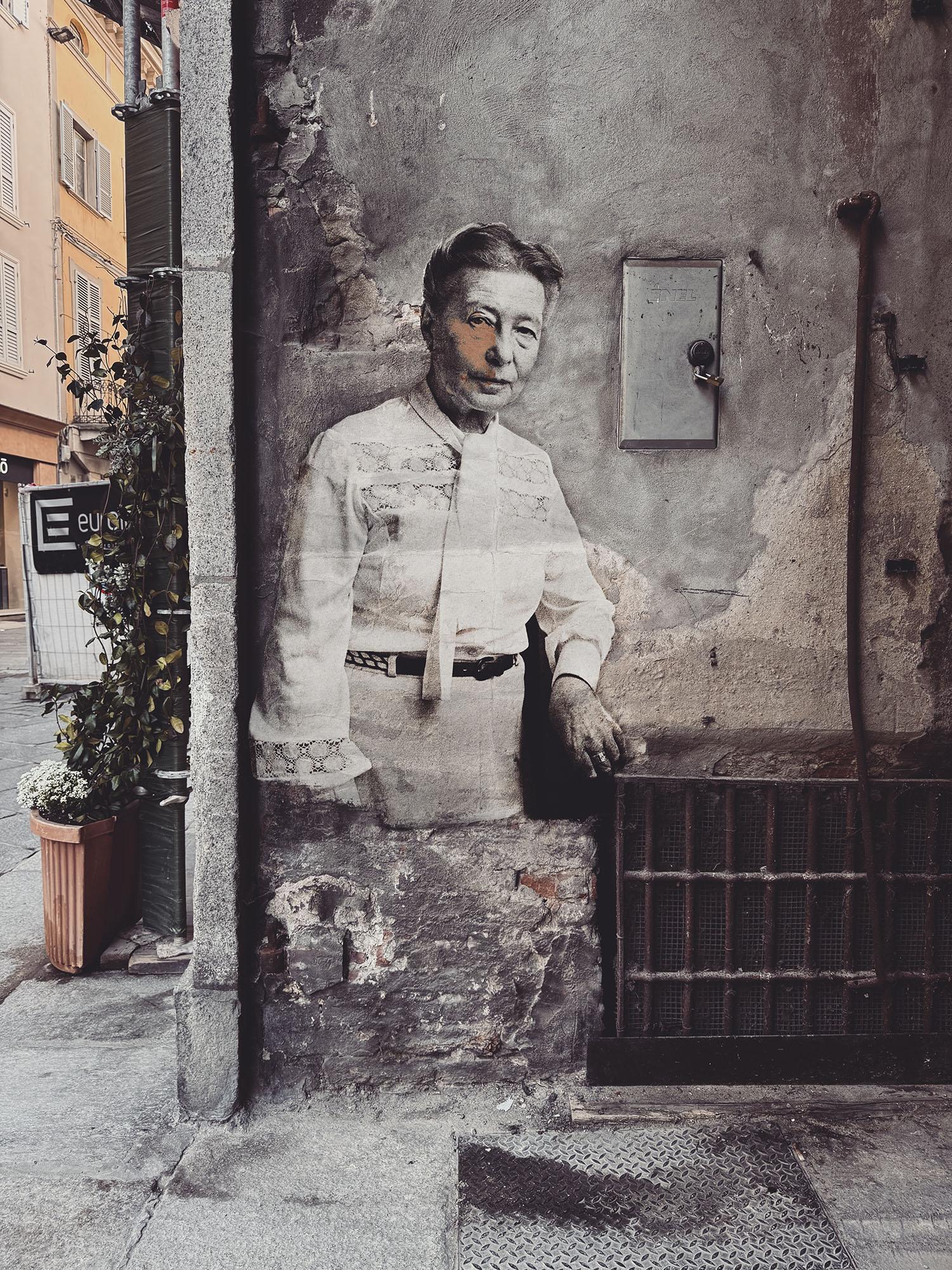
A crucial aspect of “…and we hired a bloke to fix the wall” is the technical process. Can you explain how these paste-ups are created and installed?
The process always starts with the wall, never with the subject. I photograph the chosen surface in detail, capturing every crack, stain, and imperfection. That texture is then digitally overlaid onto the portrait of the historical figure. The image is printed already “damaged” by the wall. When I paste it back onto the same surface, everything aligns. The result is a perfect correspondence between paper and masonry, making the figure appear embedded rather than applied.
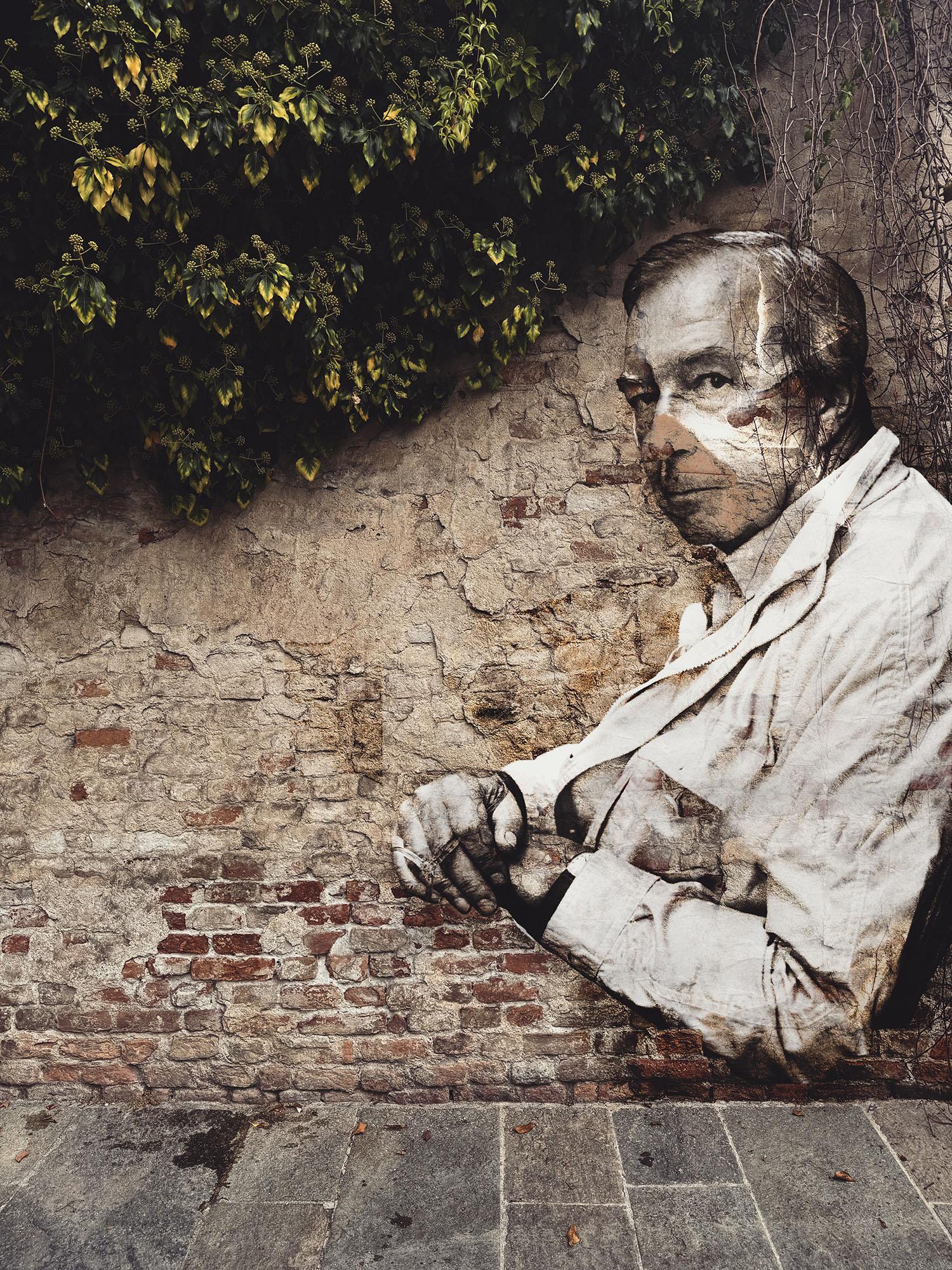
Visually, the subjects seem to “breathe through” the wall. Is this sense of apparition intentional?
Absolutely. That effect is central to the project. I want the figures to feel as if they are resurfacing, not being introduced. They are not decorative elements but latent presences. The wall represents time, erosion, neglect. The subject represents memory and meaning. When the two merge, the image becomes something in between, a presence suspended between disappearance and persistence.
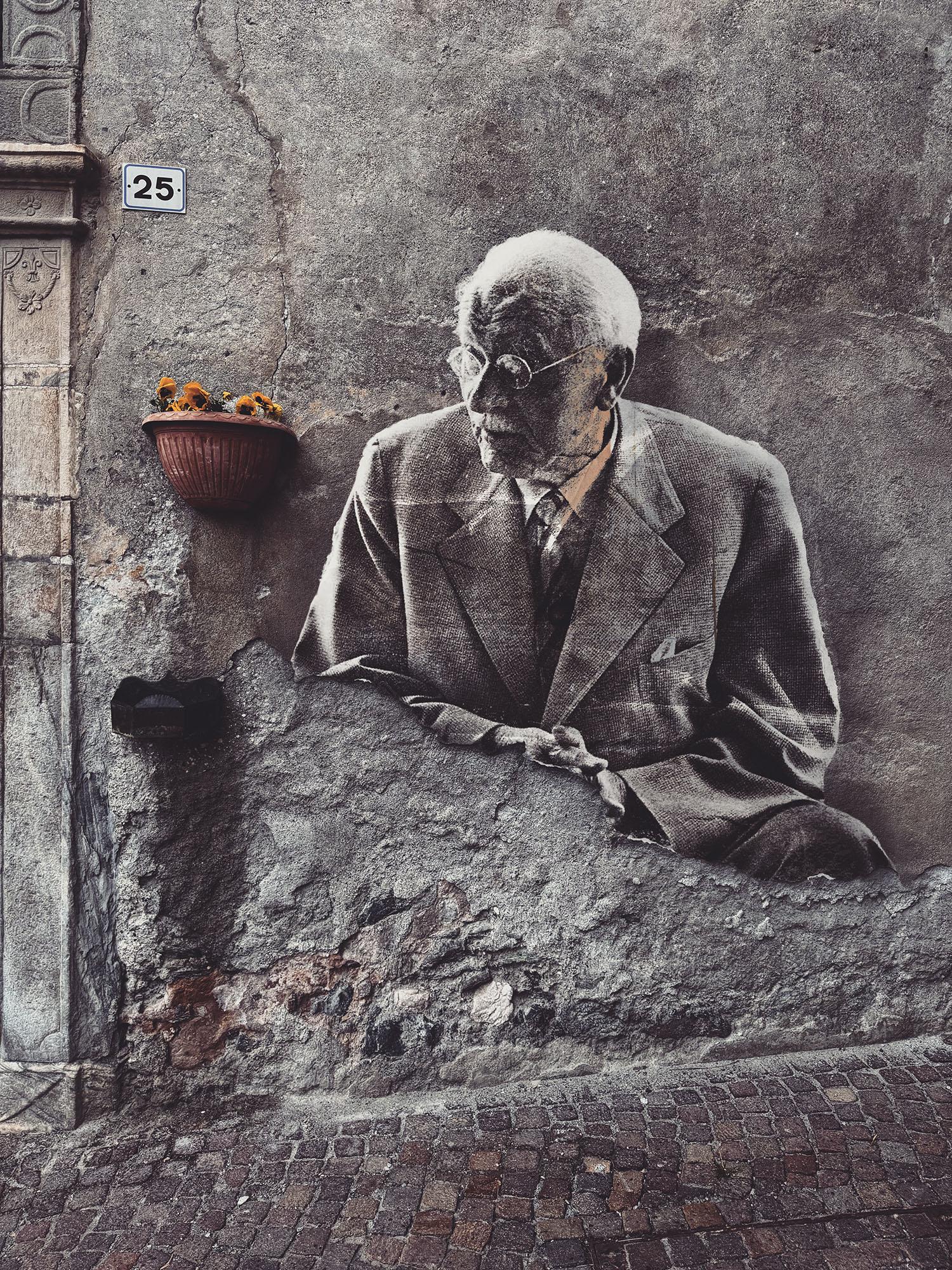
Why did you choose abandoned historical centers as the primary locations for this series?
Because abandonment creates honesty. These places are stripped of function and spectacle. They are no longer optimized, promoted, or curated. Installing works there removes the pressure of performance and visibility. The encounter becomes quieter, more intimate. It’s almost as if the space itself is collaborating, offering its scars as part of the narrative.
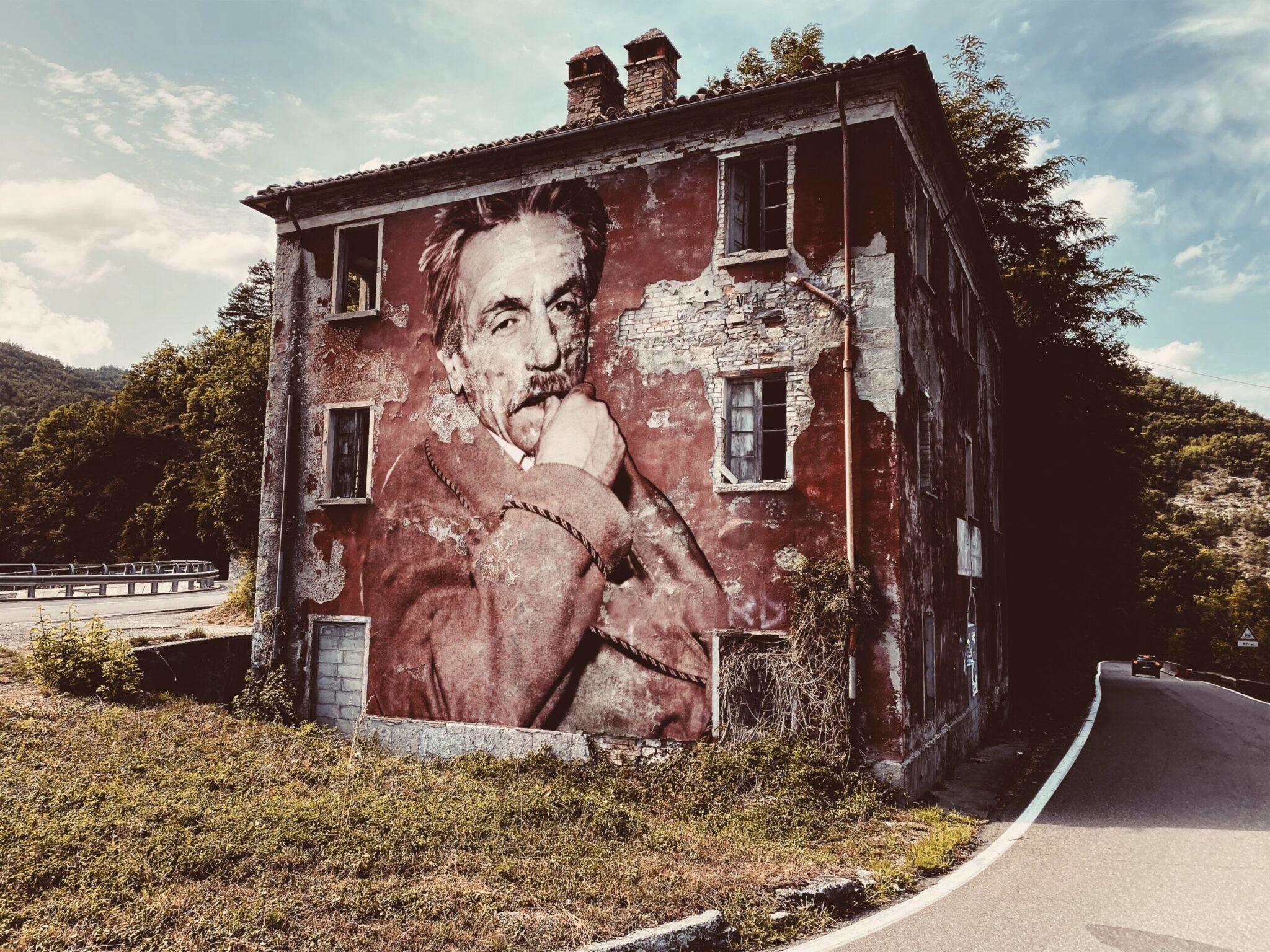
You often describe the street as an “open-air gallery” and your work as democratic. How does “…and we hired a bloke to fix the wall” fit into this idea?
Democracy, for me, is about access rather than agreement. “…and we hired a bloke to fix the wall” exists in the street because memory should not be confined to institutions. These works are exposed to weather, removal, misunderstanding. They are fragile and temporary, just like public discourse. Anyone can encounter them without mediation, without permission, and without a prescribed interpretation.
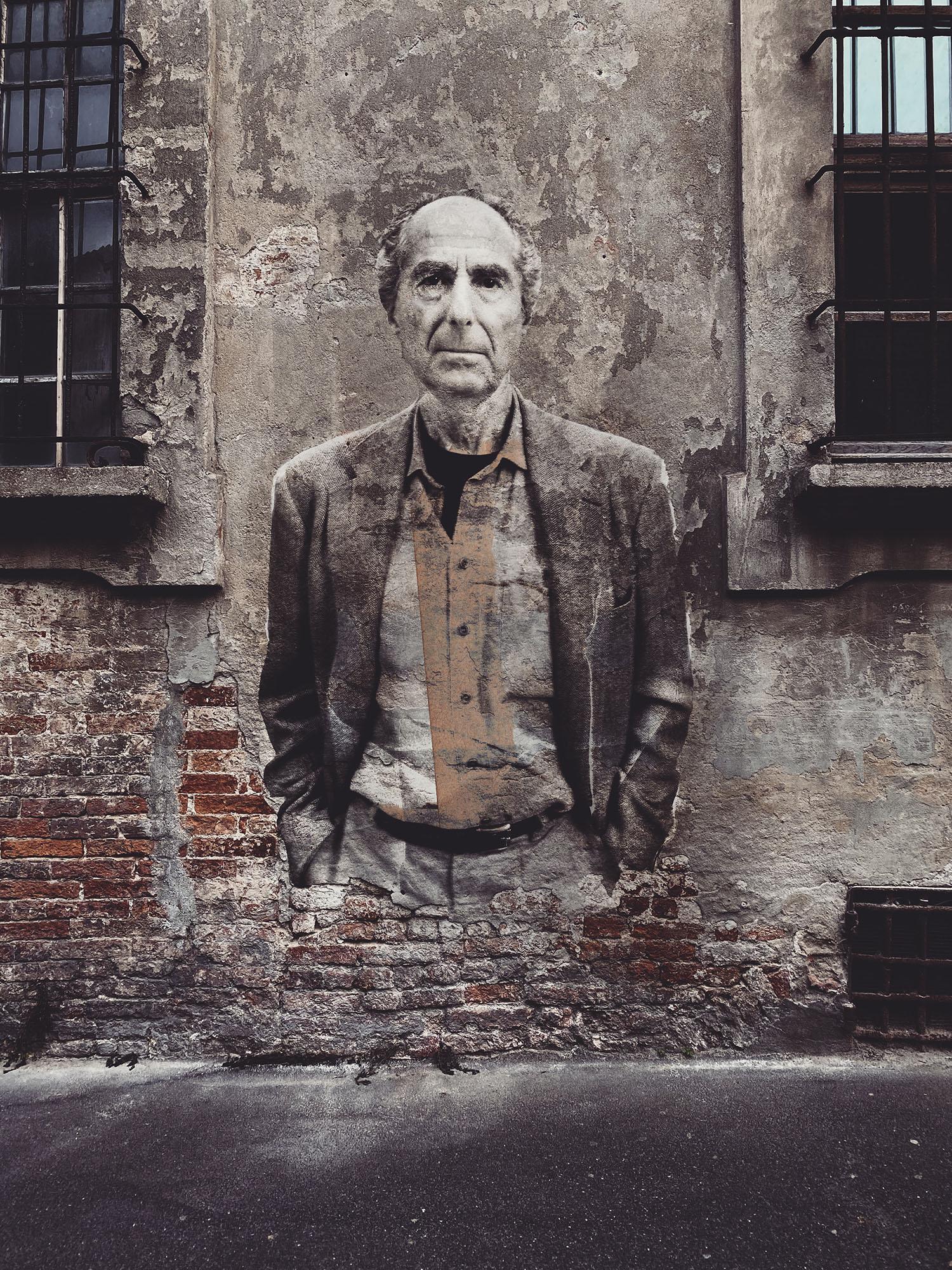
Ultimately, what do you hope viewers take away from encountering “…and we hired a bloke to fix the wall” in the street?
I hope they feel momentarily displaced. Not instructed, not reassured, but gently unsettled. When a historical figure appears where advertising or emptiness should be, it interrupts the flow of everyday life. That pause is important. If the work manages to trigger curiosity or reflection, even briefly, then the memory has already started working again.
Creativinn thanks Beast for taking the time to share his thoughts, process, and vision of street art as a space for memory and reflection. His ongoing series continues to challenge the way we look at walls, history, and what remains visible in public space. To explore more of his work and follow his latest interventions, visit www.beaststreetart.com and his Instagram profile, where new pieces and locations are regularly revealed.



 and then