
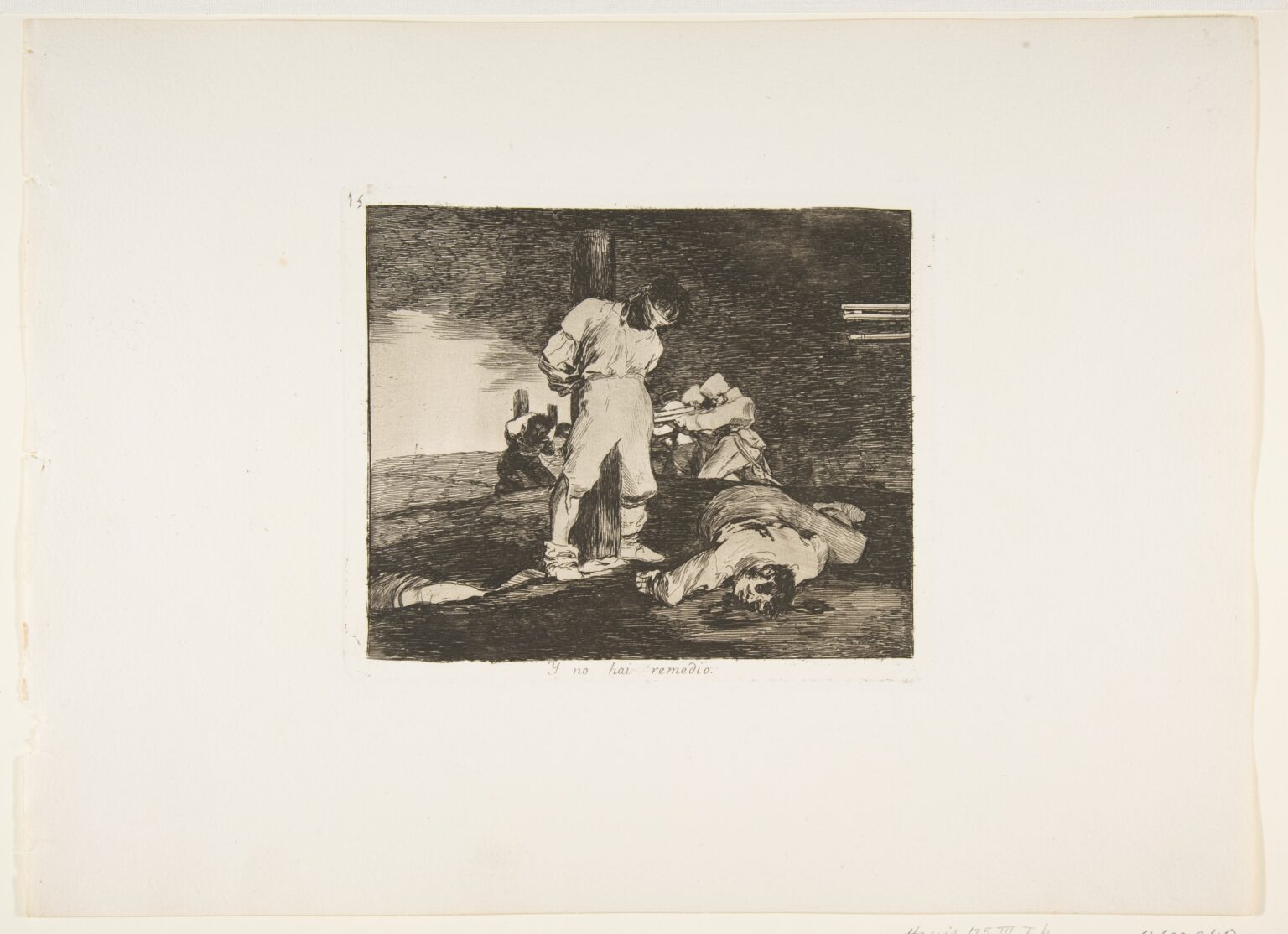
Nearly two centuries separate Francisco de Goya’s etchings from Gottfried Helnwein’s contemporary paintings, yet both question how violence becomes visible. At Barcelona’s MEAM, La Guerra Continúa: Helnwein & Goya places the Austrian artist’s large-scale hyperrealist works in dialogue with Goya’s etchings from The Disasters of War, bringing two very different visual languages into a shared confrontation.
Goya’s prints emerged from the brutality of the Peninsular War. Their refusal to glorify conflict remains unsettling. Helnwein, whose paintings frequently focus on endangered children, propaganda and the psychological residue of dictatorship, works with the clarity of photography and the scale of contemporary advertising. Popular-culture motifs appear alongside images of historical trauma, forcing viewers to examine not only what they see but why they continue looking.
The exhibition explores the uneasy boundary between witness and spectacle. Can an image make suffering more legible, or does repetition risk turning it into entertainment? Rather than proposing the artists as stylistic peers, the MEAM juxtaposes their approaches to the same ethical problem across two centuries.
Presented at the Palau Gomis in Barcelona, the exhibition remains open to the public until 7 February 2027. Visiting hours are Tuesday to Sunday, 11:00 to 19:00, with late closing at 20:00 on Fridays and Saturdays. Some works address war and harm to children and may be distressing.
Featured image: Francisco de Goya, And There Is Nothing to Be Done (Y no hai remedio), plate 15 from The Disasters of War, c. 1810, published 1863, etching and drypoint, Metropolitan Museum of Art, New York, accession 51.530.2(15). Wikimedia Commons, CC0 1.0. This historical work illustrates Goya’s contribution to the exhibition; this specific museum impression is not confirmed as on view at the MEAM.

 and then
